

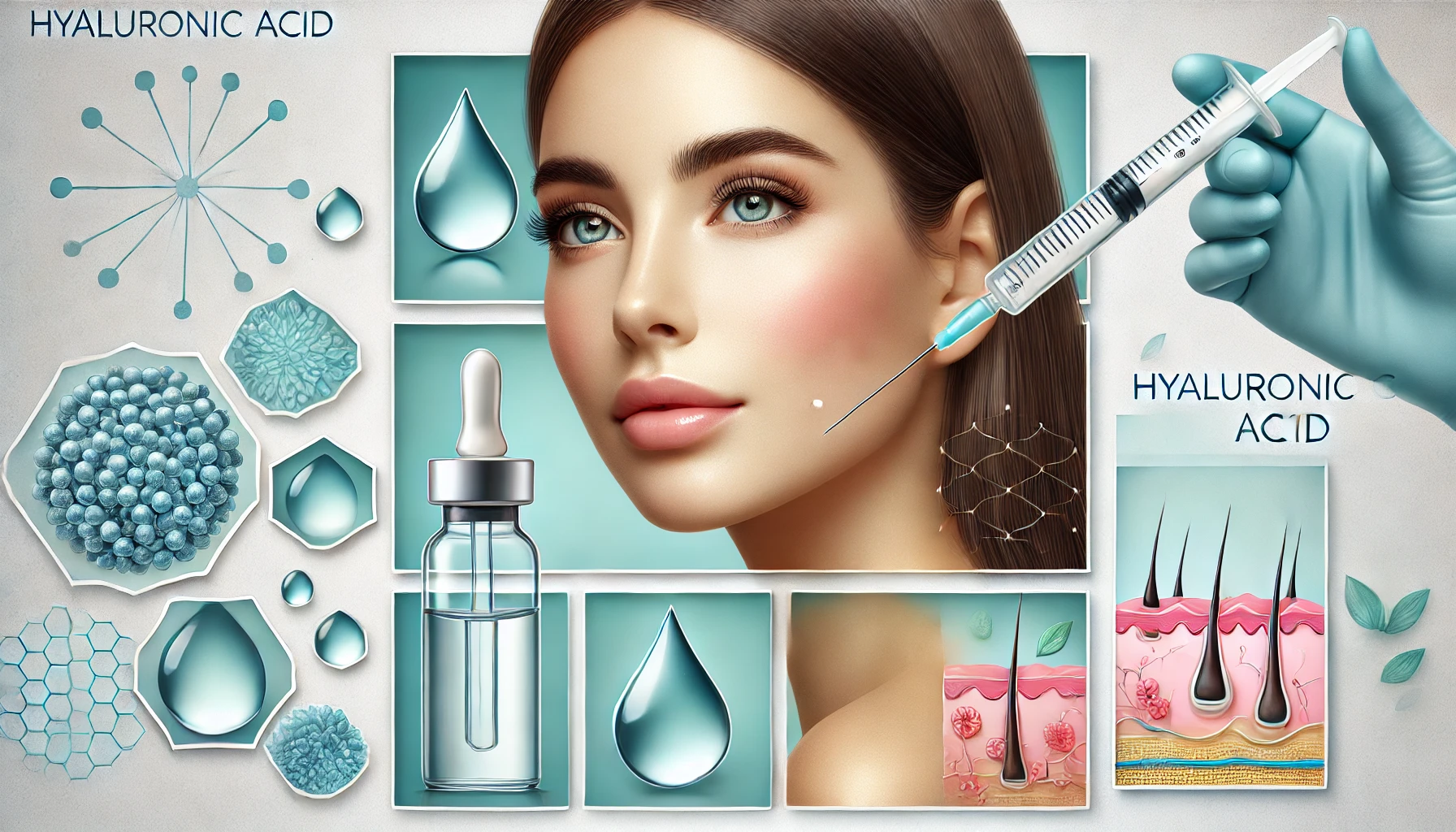
What is hyaluronic acid?
Hyaluronic acid is a molecule found naturally in the human body, mainly in the skin, eyes and connective tissue. This substance has an extraordinary capacity to retain water, which makes it an essential component in keeping the skin hydrated and plump. Over time, our body’s production of hyaluronic acid decreases, which can lead to the appearance of wrinkles and loss of skin firmness. Thanks to its unique properties, hyaluronic acid has become a key ingredient in many skin care products and aesthetic treatments.
What is hyaluronic acid used for?
The hyaluronic acid that we have in our body naturally has a very important moisturizing function, but it also fulfills other functions such as lubrication, cell support and has antiviral properties. In aesthetic medicine treatments, it is mainly used to take advantage of its capacity to moisturize and fill.
Hydration and Mesotherapy
In many facial treatments, hyaluronic acid is used to hydrate the skin. One of the best known treatments is mesotherapywhich consists of injecting small amounts of hyaluronic acid into the skin of the face, neck, décolleté or hands with a very fine needle. Mesotherapy can be administered alone or combined with amino acids, vitamins or antioxidants, and in different concentrations depending on the objective of the treatment. The usual protocol is three sessions spaced one month apart.
Filling and Crosslinking
In addition to mesotherapy, hyaluronic acid is used as a filler material in aesthetic medicine. This use requires a cross-linking process, which extends the duration of the product. Cross-linking makes it possible to obtain different types of hyaluronic acid, some softer and others more consistent, with durations ranging from months to more than a year.
Skinboosters
One of the products with less cross-linking are Skinboosters. These are applied in the form of small injections into the skin to improve its quality and hydration, having a more prolonged effect than mesotherapy. Skinboosters can last between 3 and 9 months, depending on their characteristics. The usual protocol is three sessions spaced one month apart.
Hydration of the Intimate Zone
Hyaluronic acid is also used for hydration of the intimate area, providing benefits similar to those observed in facial treatment. facial treatment. This use of hyaluronic acid helps to improve the comfort and health of the skin in sensitive areas.
Facial Filler
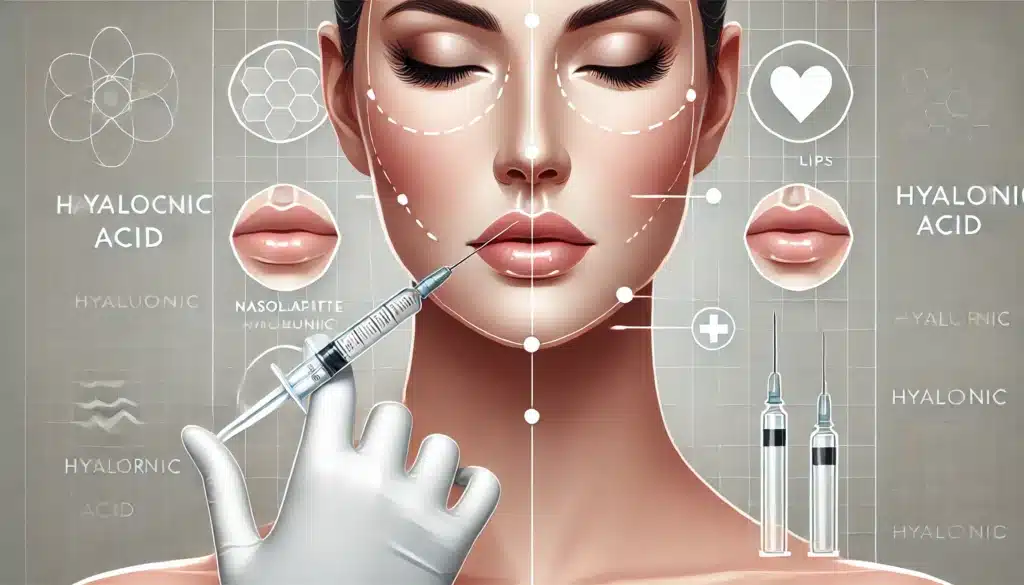
The most common use in aesthetic medicine is the facial filler. Hyaluronic acid facial fillers vary in concentration and degree of cross-linking. They are used to treat wrinkles and furrows, such as the nasolabial fold and marionette lines, as well as to beautify facial structures such as the lip, chin or nose profile. In addition, hyaluronic acid can improve the appearance of sunken dark circles under the eyes and rejuvenate the face globally, repositioning facial structures that have lost tone over time.
In summary, hyaluronic acid is used in aesthetic medicine to hydrate, plump and rejuvenate the skin, offering effective and safe solutions for a variety of aesthetic needs.
Benefits of hyaluronic acid for the skin and face
Hyaluronic acid is known for its numerous benefits for the skin and face. Its ability to attract and retain water makes it an essential ingredient for keeping skin hydrated and healthy looking. Here are some of the main benefits of hyaluronic acid:
- Intense hydration: Hyaluronic acid can retain up to 1000 times its weight in water, providing deep hydration that helps keep skin soft and supple.
- Reduction of wrinkles and fine lines: By filling wrinkles and fine lines, hyaluronic acid improves the appearance of the skin, making it look younger and smoother.
- Collagen stimulation: Promotes the production of collagen, a protein essential for maintaining skin elasticity and firmness.
- Rapid recovery: Hyaluronic acid treatments usually have minimal recovery time, allowing patients to resume their daily activities quickly.
- Improved skin texture: By deeply hydrating, hyaluronic acid helps smooth skin texture, leaving it more even and free of imperfections.
Hyaluronic acid in cosmetics
In cosmetics, hyaluronic acid is found in a wide variety of products designed to improve skin hydration and appearance. Some of these products include:
- Moisturizing creams: Formulated with hyaluronic acid to provide deep hydration and keep skin soft and supple.
- Serums: Hyaluronic acid concentrates that rapidly penetrate the skin, providing hydration and reducing the appearance of wrinkles.
- Facial masks: Designed for intensive hydration, these masks help revitalize the skin and improve its texture.
- Anti-wrinkle products: Formulated to reduce fine lines and wrinkles, improving skin firmness and elasticity.
These cosmetic products are ideal for all skin types, including the most sensitive, due to the ability of hyaluronic acid to moisturize without causing irritation.
Hyaluronic acid in aesthetic medicine
In aesthetic medicine, hyaluronic acid is a fundamental tool for a variety of treatments. Some of the most common uses include:
- Dermal fillers: Used to correct deep wrinkles and furrows, as well as to add volume to areas such as the lips and cheeks. These treatments are ideal for improving the appearance of the nasolabial fold and marionette lines.
- Facial rejuvenation: Treatments such as the 8-point facelift or facial restructuring, which reposition facial structures and improve the overall appearance of the face without losing naturalness.
- Treatment of dark circles under the eyes: Hyaluronic acid is used to improve the appearance of dark circles under the eyes, eliminating the appearance of fatigue and bringing freshness to the face.
- Beautification of facial structures: Applications on the lip, chin and nose profile (rhinomodeling) to improve facial harmony and aesthetics.
- Rhinomodelation: to change the shape of the nose without surgery.
- Rejuvenation of hands, hiding tendons and veins that give the appearance of aging hands.
Hyaluronic acid is valued in aesthetic medicine for its ability to provide natural and safe results, with minimal recovery time and a high rate of patient satisfaction.
Effects and properties of hyaluronic acid
Hyaluronic acid is known for its exceptional properties that make it a crucial component in aesthetic medicine and skin care. Its positive effects and versatility make it ideal for a wide range of treatments.
In terms of visible effects, hyaluronic acid significantly improves the appearance of the skin, making it look younger, smoother and more supple. By increasing hydration, it can also reduce the appearance of wrinkles and fine lines, providing a noticeable rejuvenating effect.
Is hyaluronic acid good for the skin?
Yes, hyaluronic acid is very good for the skin for several reasons:
- Deep hydration: Its ability to retain large amounts of water helps to keep the skin hydrated and healthy.
- Reduction of wrinkles and fine lines: By filling wrinkles, hyaluronic acid improves skin texture and firmness.
- Collagen stimulation: Promotes collagen production, which is crucial for maintaining skin elasticity and youthfulness.
Possible side effects of hyaluronic acid may include redness, swelling or small bruises at the injection site. However, these effects are usually temporary and disappear within a few days. It is essential that treatments are performed by qualified professionals to minimize any risks.
Does hyaluronic acid cause skin blemishes?
No, hyaluronic acid does not cause skin blemishes. In fact, it is known for its soothing properties and its ability to improve the overall appearance of the skin. Unlike some treatments that can sensitize the skin to the sun and cause blemishes, hyaluronic acid is safe and does not have this adverse effect. It is important to use high quality products and follow the specialist’s recommendations to obtain the best results without unwanted effects.
When and how to use hyaluronic acid
Hyaluronic acid can be used in different ways depending on the type of treatment and the desired results. The following describes how and when to apply this valuable component in aesthetic medicine treatments.
Professional treatments with hyaluronic acid
At Antiaging Group Barcelona, we recommend that hyaluronic acid treatments be performed by qualified professionals to ensure the best results and maximum safety. Some of the most common treatments include:
- Mesotherapy: It is recommended to perform three mesotherapy sessions spaced one month apart. This treatment is ideal to hydrate the skin of the face, neck, neckline and hands.
- Skinboosters: To improve the quality of the skin and its hydration, Skinboosters are applied in three sessions spaced one month apart, with a duration of effects that can vary between 3 and 9 months.
- Dermal fillers: Hyaluronic acid fillers are applied to treat wrinkles, furrows and give volume to specific areas of the face. Depending on the type of filler and the area treated, results can last from months to more than a year.
When to apply hyaluronic acid in the skin care routine
Hyaluronic acid can be used at any time of the year, but is especially beneficial in the following situations:
- Prevention of aging: From the age of 25-30, it is recommended to start hyaluronic acid treatments to maintain hydration and prevent the first wrinkles.
- Rejuvenation: At older ages, hyaluronic acid treatments help restore lost volume and improve skin firmness.
- After sun exposure: After periods of intense sun exposure, hyaluronic acid treatments help rehydrate the skin and repair sun damage.
- Before special events: For a fresh and rejuvenated look, hyaluronic acid treatments can be performed before important events, as they offer visible results with minimal recovery time.
The importance of treatment in specialized clinics
Performing hyaluronic acid treatments in a specialized clinic such as Antiaging Group Barcelona guarantees:
- Safety: Treatments are performed by highly qualified professionals, using the highest quality products.
- Personalized results: Each treatment is tailored to the specific needs of each patient, ensuring natural and harmonious results.
- Follow-up: A post-treatment follow-up is performed to ensure patient satisfaction and the correct evolution of the results.
At Antiaging Group Barcelona, we are committed to providing hyaluronic acid treatments that improve the health and appearance of the skin, offering effective and safe solutions for each patient.
Discover how your skin can be transformed with our hyaluronic acid treatment in Barcelona, and schedule your consultation now!
Frequently Asked Questions about Hyaluronic Acid
What is hyaluronic acid and what does it work for?
Hyaluronic acid is a molecule found naturally in the human body, especially in the skin, eyes and connective tissue. Its main function is to retain water to keep tissues well lubricated and hydrated. In aesthetic medicine, it is used to hydrate the skin, fill wrinkles and give volume to specific areas of the face.
What happens if I use hyaluronic acid every day?
Using topical hyaluronic acid products every day is generally safe and can be very beneficial in keeping the skin hydrated and smooth. However, injectable treatments should follow the recommendations of a professional to avoid side effects and ensure optimal results.
When is it advisable to use hyaluronic acid?
Hyaluronic acid is recommended from the age of 25-30 years to maintain skin hydration and prevent the first wrinkles. It is also ideal for rejuvenating the skin at older ages and after periods of intense sun exposure.
How is hyaluronic acid used on the face?
Hyaluronic acid can be used on the face through topical products such as serums and creams, which should be applied after cleansing and before moisturizers. In aesthetic treatments, it is injected into specific areas to fill wrinkles, add volume and improve skin texture.
What are the benefits of using hyaluronic acid on the face?
Using hyaluronic acid on the face offers multiple benefits, including deep hydration, reduction of wrinkles and fine lines, improved skin elasticity and firmness, and an overall younger, healthier appearance.
When is it advisable to use hyaluronic acid?
Hyaluronic acid is recommended any time you want to improve skin hydration and appearance. It is especially useful in the prevention of aging and skin rejuvenation.
What happens if I use hyaluronic acid every day on my face?
Using hyaluronic acid every day on the face, through topical products, can keep the skin hydrated and improve its texture and overall appearance. However, it is important to follow product instructions and not exceed recommended dosages.
What are the benefits of hyaluronic acid on the face?
Hyaluronic acid on the face helps to keep the skin hydrated, reduce wrinkles and fine lines, improve elasticity and firmness, and provide a younger, healthier appearance.
What are the side effects of hyaluronic acid?
Topical hyaluronic acid rarely causes side effects. However, injectable treatments may cause redness, swelling or minor bruising at the injection site. These effects are usually temporary and disappear within a few days. It is always important to have injectable treatments performed by a qualified professional to minimize risks.

Dr. Laura Salvador Miranda is a founding partner of Antiaging Group Barcelona, with more than 25 years of experience in Aesthetic Medicine and Surgery. She holds a degree in Medicine and Surgery from the University of Barcelona and specialized in General Surgery at Hospital Clínic de Barcelona. Since 1999, she has been exclusively dedicated to Aesthetic Medicine, leading the Aesthetic Medicine group since 2004 and heading the advanced laser treatments department since 2006.
She is currently a professor in the Master’s Degree in Aesthetic Medicine and Wellness at IFMiL (University of Barcelona – COMB), actively participates in research and scientific publications, and is a member of medical societies such as SEME, SELMQ, SETGRA, and the Collegiate Section of Aesthetic Medicine Physicians of COMB.